
Loss Control Services
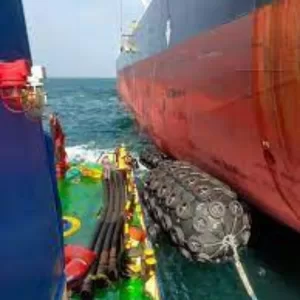
STS Transfer Operations — service scope and technical capabilities. Our STS assessment, monitoring and advisory team represents your interests worldwide, from pre-transfer risk assessment through to post-transfer reporting.
Loss Control Services
- Pre-transfer risk assessment and review of STS transfer plans, including operation-specific risk matrices tailored to vessel pairing, cargo type and location
- Verification of compliance with IMO, OCIMF, ISGOTT and applicable local/flag-state regulatory requirements
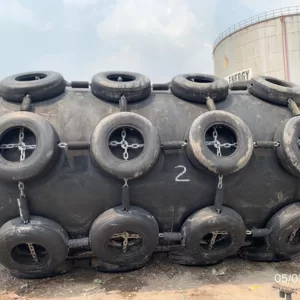
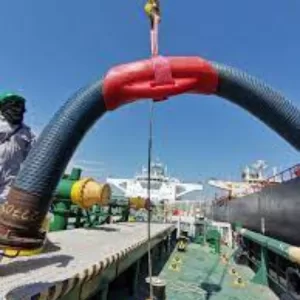
- Suitability assessment of participating vessels, fender systems, hoses and transfer equipment, including compatibility checks against vessel freeboard, displacement and manifold arrangements
- Review of weather, sea-state, current and navigational conditions before and throughout the operation, with go/no-go decision support against pre-agreed operational limits
- Attendance by qualified marine surveyors or STS superintendents to monitor critical stages — approach, mooring, hose connection, cargo transfer, unmooring and departure
- Verification of cargo quantities before and after transfer, including ullage/sounding measurement, temperature and density corrections, and reconciliation procedures
- Monitoring of pollution prevention measures and spill-response preparedness, including boom deployment readiness and SOPEP/SMPEP compliance checks
- Incident investigation, root-cause analysis and recommendations for corrective action following any loss event, with formal reporting to support claims handling
Technical Capabilities
- Experienced STS transfer masters and marine specialists with hands-on tanker operations expertise across crude, product and gas carriers
- Advanced mooring analysis and vessel compatibility assessments, accounting for fender reaction forces, hull contact pressures and mooring line loads
- Real-time monitoring of vessel position, movement, weather and transfer parameters, supported by dedicated monitoring equipment where required
- Inspection and certification of hoses, fenders and ancillary transfer equipment against manufacturer and OCIMF guidelines, including pressure testing records review
- Cargo transfer monitoring, including pressure, flow rate and emergency shutdown (ESD) procedures, to keep operations within safe operating envelopes
- Use of marine risk modelling and operational checklists to identify and mitigate hazards before they develop into loss events
- Detailed operational reporting, documentation and post-transfer performance reviews, providing an auditable record for owners, charterers and insurers
- Capability to support transfers involving crude oil, petroleum products, LNG/LPG (where applicable) and other bulk liquid cargoes, with specialist attendance matched to cargo-specific hazards
Additivation and Blending Procedures
- Verification of additive injection systems (in-line and batch dosing) for correct calibration, dosing rates and traceability prior to commencement of transfer
- Review of additive compatibility with base cargo grade to confirm no adverse chemical interaction, phase separation or specification deviation
- Witnessing of additive injection during transfer, including cross-checks of dosing pump flow rates against agreed treat-rate ratios
- Sampling and retention of additive batches (with certificates of quality/analysis) alongside base product samples for traceability and post-transfer verification
- Oversight of on-board or in-line blending operations, including monitoring of blend ratios, homogeneity and sequencing to achieve target product specification
- Verification of blending equipment calibration (flow meters, blend ratio controllers) and cross-referencing against static/dynamic mass balance calculations
- Post-blend quality control checks, including density, viscosity, flash point and other relevant parameters against contractual/certificate specifications
- Documentation of additivation and blending records — dosing logs, blend certificates and QC results — to support cargo quality claims and regulatory compliance
- Investigation support in cases of off-specification product, including root-cause analysis of dosing, blending or contamination issues